Aerial Work Platforms (AWPs) are essential for modern construction and maintenance works. Whether it involves the installation of high-rise panels or the implementation of regular checks of the facilities, they enable workers to access high locations safely, efficiently, and accurately. However, this convenience comes with responsibility. Even small lapses, like skipping inspections or failing to use proper fall protection, can lead to severe accidents, project overruns, and costly OSHA fines.
Safety compliance isn’t just about meeting regulations; it ensures worker protection, operational reliability, and productivity on‑site. This blog identifies the five most frequent OSHA violations related to aerial work platforms and how they can be avoided. It also discusses how the solutions designed by Bailey Cranes can assist businesses in remaining OSHA-compliant and improve on-site safety.
Understanding OSHA Standards for Aerial Work Platforms
The Occupational Safety and Health Administration (OSHA) has established strict safety standards to ensure responsible aerial lift operations. As per OSHA 29 CFR 1926.453, employers must train operators, conduct inspections, and establish safe operating procedures for all aerial work platforms.
The main OSHA expectations are:
- Training and Certification: Operators must receive both classroom and practical training before using aerial lifts.
- Pre-Operation Check: Equipment must be inspected daily to ensure all controls, safety features, and structural components are functioning properly.
- Fall Protection: Guardrails, harnesses, and approved tie‑off points must be used correctly to prevent falls.
- Safe Work Practices: Operators must follow manufacturer capacity limits, avoid unauthorized modifications, and refrain from operating in hazardous conditions such as high winds or unstable ground.
These standards are the basis of safety in the workplace, yet there are numerous sites where the rules for all types of aerial work platforms are violated through neglect or misuse.
Common OSHA Violations in Aerial Work Platform Operations
1. Lack of Operator Training and Certification
A significant number of OSHA violations are the result of untrained or poorly certified operators. Without proper training, workers may not understand safe operating procedures, emergency protocols, or equipment limitations. Employers must ensure operators complete both theoretical and hands‑on training
2. Lack of Equipment Inspection and Maintenance
One significant safety omission is disregarding pre-operation inspections. Leakage of hydraulic fluid, broken guardrails or defective emergency controls may remain unnoticed and will cause hazards during the operation stage. OSHA mandates that every AWP should be inspected on a daily basis, and proper maintenance records should be kept to ensure the mechanical integrity and safe operation.
3. Overloading and Unsafe Work Practices
Clogging platforms or utilizing them in a different manner than they were intended is a common violation. Operators must never overload the platform capacity designated by the manufacturer and lean over guardrails. It is necessary to prevent tip-overs and falls by proper load management and by understanding platform constraints.
4. Absence of Adequate Fall Protection
Falls from height are one of the leading causes of workplace fatalities. OSHA requires the use of guardrails or personal fall arrest devices on AWPs. Workers should always connect lanyards to approved anchor points and maintain three‑point contact when entering or exiting platforms.
5. Working in Unsafe Site Conditions
Environmental hazards such as unstable ground, high winds, and nearby electrical lines increase risk. OSHA requires operators to assess site conditions before each use and ensure sufficient clearance from power lines to avoid electrocution or equipment damage.
How Bailey Cranes Supports OSHA-Compliant Operations
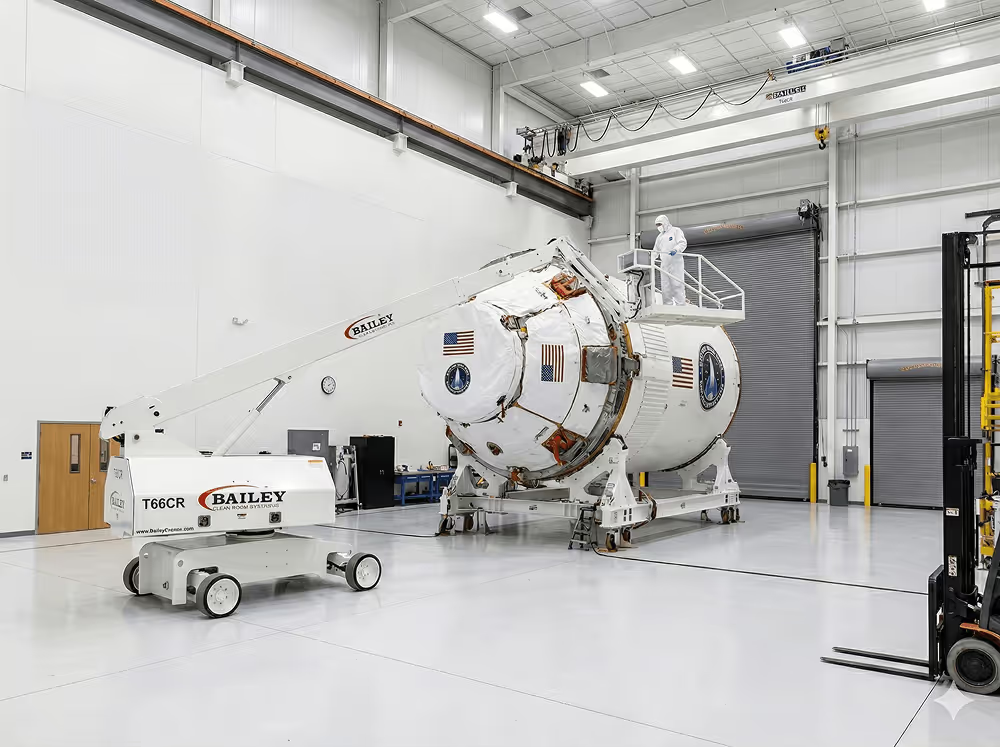
Bailey Cranes designs and develops highly advanced and high-performance Mobile Elevating Work Platforms (MEWPs) engineered for operator safety, precise control, and full regulatory compliance. Each Bailey lift includes safety features that help prevent OSHA violations before they occur.
1. Electrically Insulated Lifts Lift Without Electrical Risks
One of the key threats observed in construction sites is electrical hazards. Bailey Cranes also provides electronically insulated lifts that do not allow current to pass through the platform. Our insulation package, which is designed to be compatible with most AWP brands, includes a fiberglass boom assembly and wireless or fiber‑optic controls. These systems meet ANSI A92.2 insulation standards and protect operators working near high‑voltage areas.
2. Magnetic and Explosive Hazard Protection
Common equipment is not guaranteed to be safe in operations where electromagnetic interference or explosive atmospheres are present. Bailey’s Magnetically Shielded Lifts protect critical control systems from high magnetic fields that may affect performance.
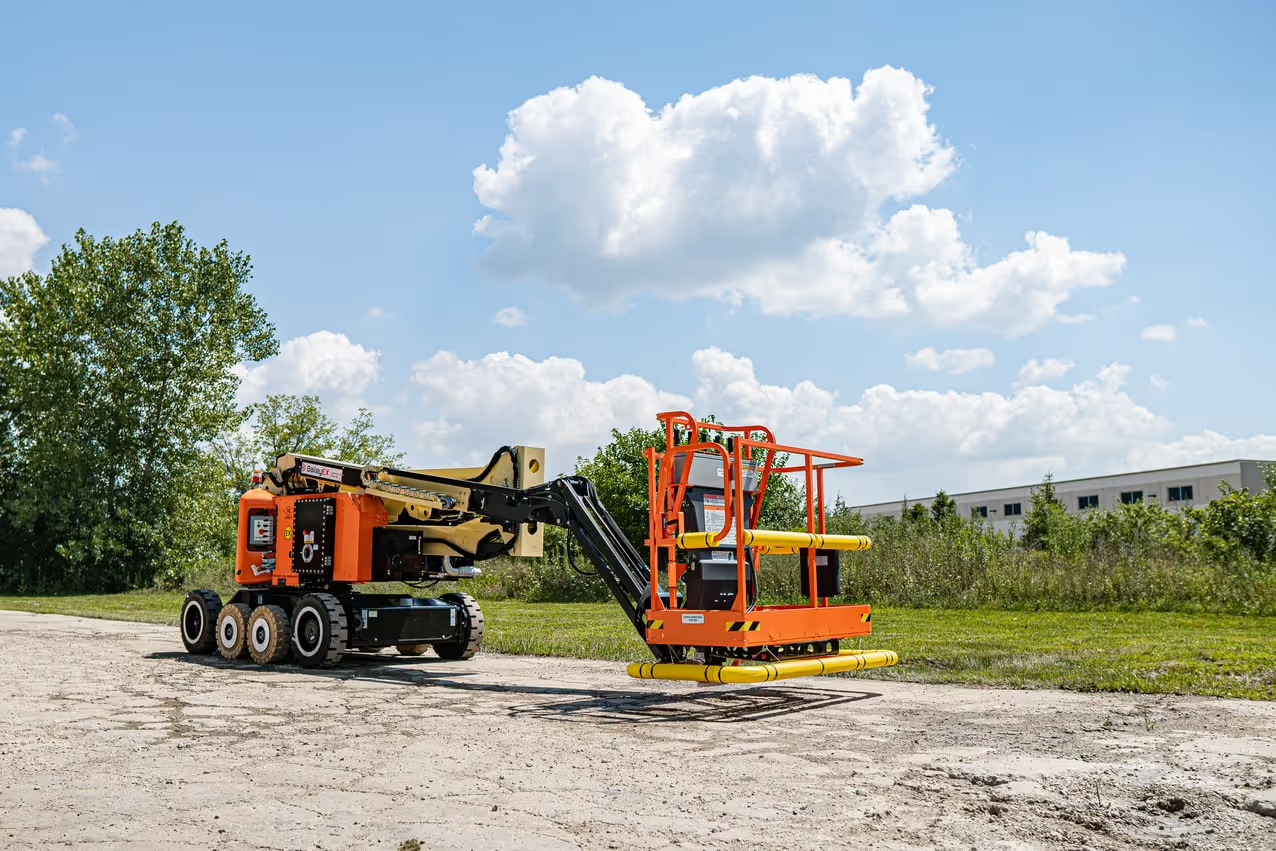
For extreme environments, our Explosion‑Proof (EX) Aerial Lifts comply with ANSI A92.20 and FM Class standards and include:
- High-technology load control.
- Streamlined hydraulic systems to reduce leak points
- Explosion‑proof electrical components
- Industry‑specific customization options
These characteristics make sure that operations can be made OSHA-compliant even in a volatile environment and that workers are protected in all stages.
3. Safer Alternatives of Air-Powered Lifts and Pedestal-Mounted Lifts
Bailey also designs scissor lifts and mast lifts powered by pneumatic systems, which are air-powered, eliminating any chances of ignition due to electric sources. The GAST air motors drive each system and are designed to be operated in a controlled, stable manner and are ideal in industries where full adherence to safety standards is essential.
Also, man lifts that are mounted on a pedestal and are manufactured by the team of professional engineers at Bailey provide a stable level, superb range of movement, and accurate positioning, all without compromising OSHA standards.
4. Smarter, Safer Worksite Collision Avoidance Systems
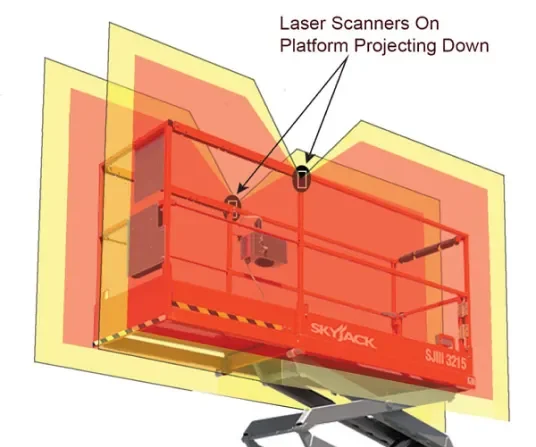
Modern construction sites require high-efficiency safety automation. The collision avoidance systems developed by Bailey combine smart laser sensors and zone mapping to sense objects and automatically halt the movement of the platform prior to collision.
Through all these layered safety measures electrical isolation and smart monitoring measures, Bailey Cranes offers OSHA-consistent aerial work platforms that ensure that the crews are safe and operations are effective.
Conclusion
Safe aerial lift operation requires proper training, routine maintenance, and the right equipment. OSHA compliance is a continuous process focused on protecting workers and maintaining safe job sites.
Bailey Cranes serves as a trusted partner by providing engineered aerial work platforms equipped with safety‑enhancing features, including electrical insulation, collision prevention, and stable lift performance. With Bailey, construction teams can operate confidently, safely, and in compliance with industry standards.
To learn more about OSHA‑compliant aerial lift solutions, call Bailey Cranes at 262‑710‑4028 or email sales@baileycranes.com. Our team will help you choose the right lift based on your job‑site safety and performance needs.
FAQs
1. Which OSHA rules are applicable to aerial work platforms?
OSHA 29 CFR 1926.453 provides the requirements of training, inspection, fall protection and safe operation of the aerial lifts within the construction site.
2. How do the aerial lifts of Bailey Cranes contribute to OSHA compliance?
The lifts of Bailey are designed with insulated, load-sensing, and collision avoidance technology, assisting operators in keeping OSHA/ANSI safety requirements up to date with a sense of confidence.
3. Is Bailey Cranes able to tailor aerial lifts to specific site conditions?
Yes. Bailey provides tailor-made solutions like explosion-proof, magnetically shielded lifts and air-powered lifts that are meant to be used in specialized workplaces with high adherence requirements.


.avif)