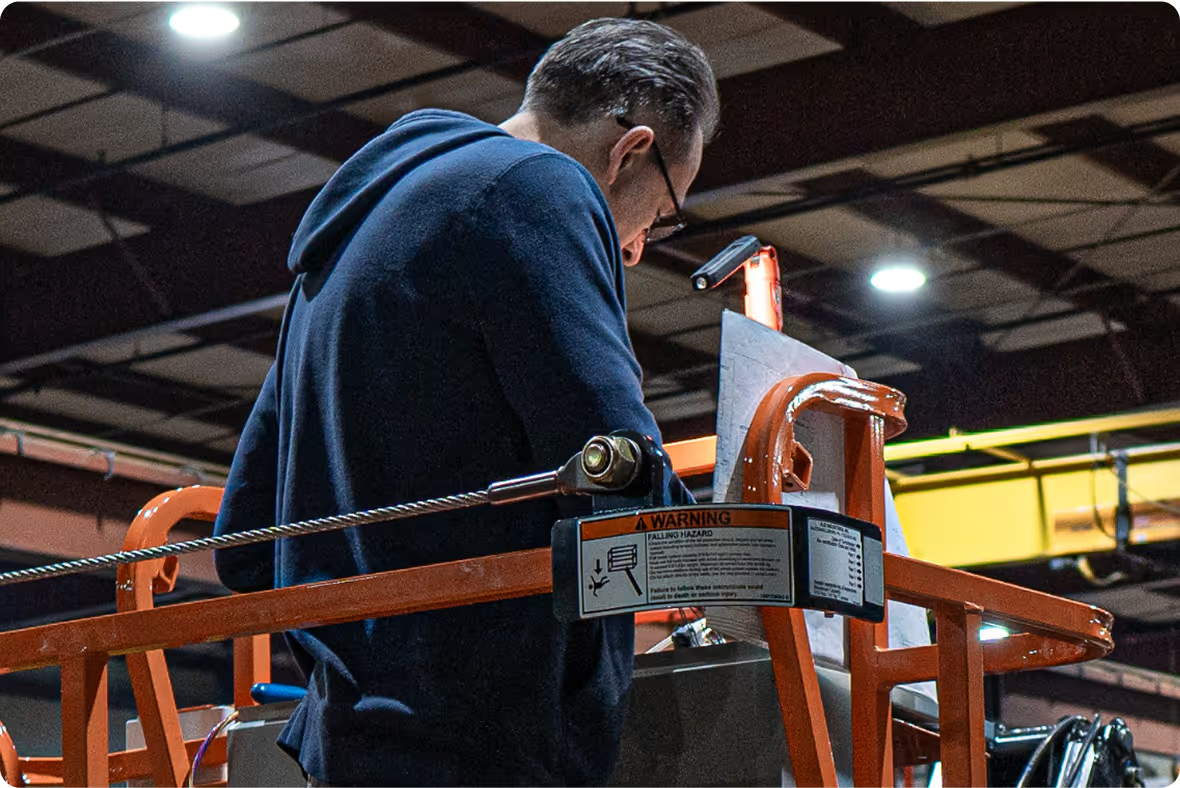
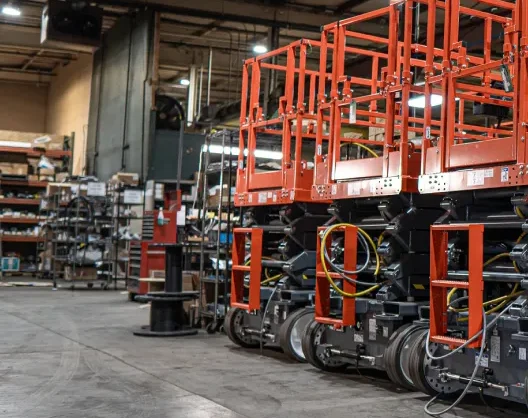
Scissor lift is an aerial work platform, that is used to safely move workers and equipment at an elevated height. These lifts are widely used in construction, logistics, warehouse management, and many other industries. The cost of scissor lift varies depending on the type and features.
In this blog, we’ll explore the differences between hydraulic scissor lift and electric scissor lift in detail.
Hydraulic scissor lifts
Hydraulic scissor lifts are run by hydraulic oil that is used to pump the system and create pressure, causing the scissor arms to extend and retract. These lifts offer heavy duty performance, thus making them a popular choice for industries that require heavy loading tasks.
Advantages
- Simple mechanics: A hydraulic scissor lift is manufactured with simple mechanics, which makes the lift easier to operate. Even workers who are not trained can quickly use this equipment effectively.
- Durability and strength: Hydraulic scissor lifts have the capacity to lift heavy loads as compared to electric scissor lifts. These lifts are designed for rugged environments and to handle high-capacity tasks.
- Power: Hydraulic scissor lifts rely on fluid power, as they don’t need a constant source of electricity. This advantage comes in handy in environments where electricity is not available.
- Usage in different environments: No matter what the environment is, hydraulic scissor lifts can be used under any conditions.
- Cost-effectivess: The strength and durability of these lifts result in fewer breakddowns and repairs. For heavy lifting tasks, hydraulic scissor lifts are cost-effective than their electric counterparts.
Disadvantages
- Significant fluid leakage risk: Hydraulic systems inherently present a considerable risk of fluid leakage. These leaks not only compromise operational efficiency but also pose environmental hazards when hydraulic fluid contaminates work areas. Organizations must account for potential remediation costs and compliance issues.
- Reduced operational speed: Hydraulic scissor lifts demonstrate markedly slower operational capabilities, particularly in low-temperature environments. The increased viscosity of hydraulic fluid in cold conditions substantially impedes movement, resulting in diminished productivity during time-sensitive projects.
- Extensive maintenance requirements: These systems necessitate rigorous and frequent maintenance protocols. Regular hydraulic fluid analysis, filter replacement, and comprehensive system inspections are non-negotiable aspects of ownership. Failure to adhere to these maintenance schedules often results in premature system failure and increased downtime.
- Elevated noise emission levels: The operational mechanics of hydraulic systems produce significant noise pollution. This characteristic renders them unsuitable for noise-sensitive environments or applications where communication clarity is essential for safety and productivity.
Electric scissor lifts
Electric scissor lifts function on batteries or on a direct electricity source. These lifts are mostly used in indoor environments like warehouses, factories, or a clean working environment.
Advantages
- Zero omissions: Electric scissor lifts don’t produce harmful emissions, which makes them a environmental friendly option. They don’t rely on combustion and hydraulic fluids.
- Energy efficient: Electric scissor lifts that use rechargeable batteries are highly energy efficient. They use lower energy over time and result in lower operating costs.
- Quiter operations: One of the essential advantages of electric scissor lifts is how quite they operate in any environment.
- Precision control: Electric scissor lifts operate smoothly with precision control. They function faster with more accurate positioning.
Disadvantages
- Restricted weight capacity: Electric scissor lifts exhibit substantial limitations regarding maximum load capacity. This constraint frequently necessitates the procurement of additional equipment when dealing with heavier materials, potentially increasing overall project costs and complexity.
- Power supply vulnerability: The operational continuity of battery-powered electric lifts remains entirely contingent upon charge status. Power depletion during critical operations can result in significant workflow disruptions. Implementing robust charging protocols becomes an essential operational consideration.
- Environmental usage limitations: These units demonstrate reduced efficacy in adverse weather conditions. Moisture exposure presents serious operational and safety concerns, substantially restricting their application in outdoor environments. Organizations must carefully evaluate deployment locations to ensure appropriate operating conditions.
- Substantial initial capital expenditure: The acquisition of electric scissor lifts represents a considerably higher initial investment compared to hydraulic alternatives. While operational cost advantages may accrue over time, the initial procurement expense can present a significant barrier to entry, particularly for smaller operations with limited capital resources.
Conclusion
When choosing between hydraulic and electric scissor lifts, your decision should be based on specific business requirements, working environments, and budget considerations. Hydraulic scissor lifts excel in heavy-duty applications, outdoor environments, and situations where electrical power may be limited. Their strength, durability, and versatility in harsh conditions make them ideal for construction sites and industrial settings that require lifting substantial weights.
On the other hand, electric scissor lifts are the preferred choice for indoor operations where precision, quiet operation, and environmental factors are priorities. Their zero emissions, energy efficiency, and lower maintenance requirements make them cost-effective in the long run, despite a higher initial investment.
For heavy-duty jobs in rugged outdoor environments, hydraulic scissor lifts remain the best option. For indoor operations and lighter tasks where precision and environmental concerns are important, electric scissor lifts are the superior choice.
By understanding these differences, you can select the lift that will maximize productivity and efficiency in your specific work environment while meeting your budget constraints. The right choice will depend on balancing your immediate needs with long-term operational considerations.


.avif)