.avif)



Aerial Platforms for Glass Positioning: How to Lift, Place, and Install Glass Panels Safely
Glass panels are heavier, larger, and more fragile than they look. A floor-to-ceiling architectural panel can weigh several hundred pounds and cost tens of thousands of dollars — and it has to land exactly right, on the first attempt, without a scratch.
Why Standard Lifts Fall Short for Glass
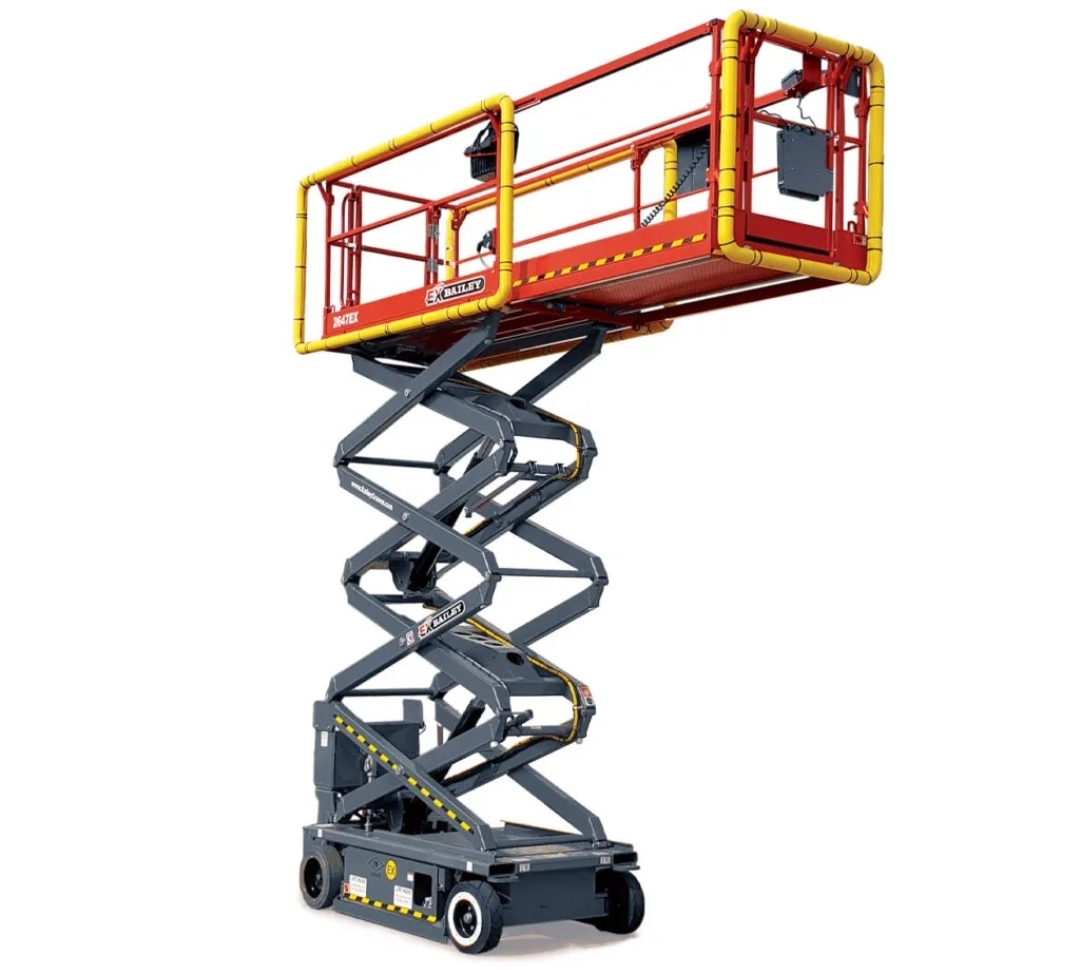
Most aerial work platforms are designed to lift workers and tools to a fixed height. They move vertically, lock in place, and hold a platform steady. That's sufficient for painting a ceiling or running conduit — but glass installation is a different challenge entirely.
Glass panels must often be approached from below, rotated to a specific angle, extended horizontally to reach a mounting point, and then nudged into precise alignment within millimeters. A standard scissor lift or boom lift has none of these capabilities.
The result, when wrong equipment is used, is a combination of manual handling risk, glass breakage, and extended installation time. Workers end up improvising — using straps, extra personnel, and makeshift support — which introduces exactly the kind of uncontrolled forces that damage glass.
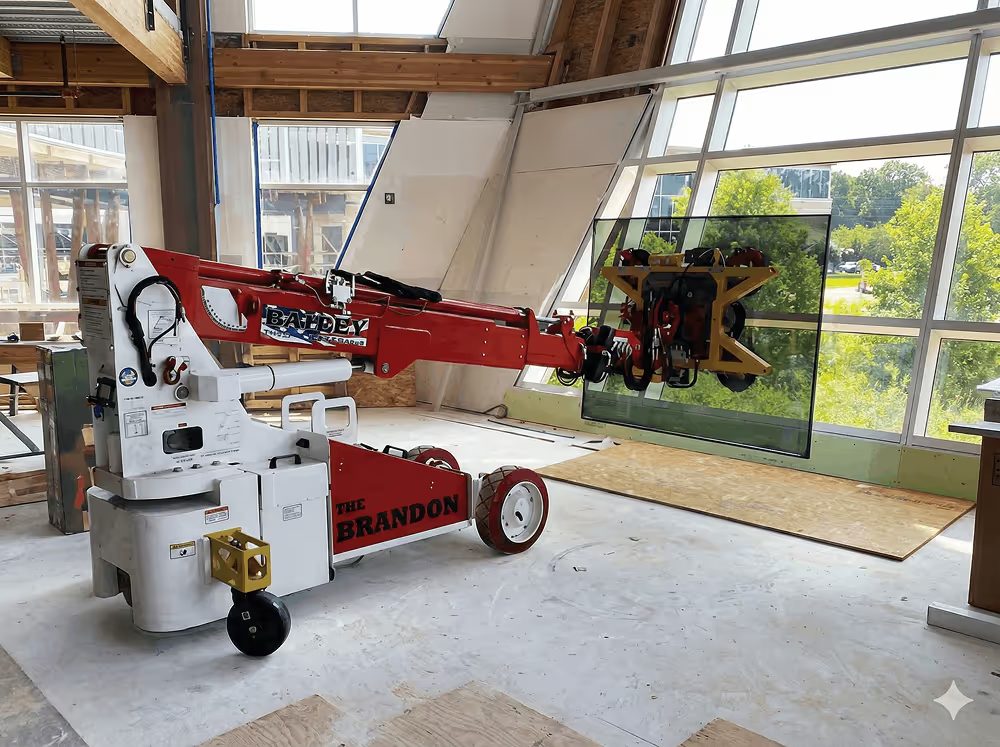
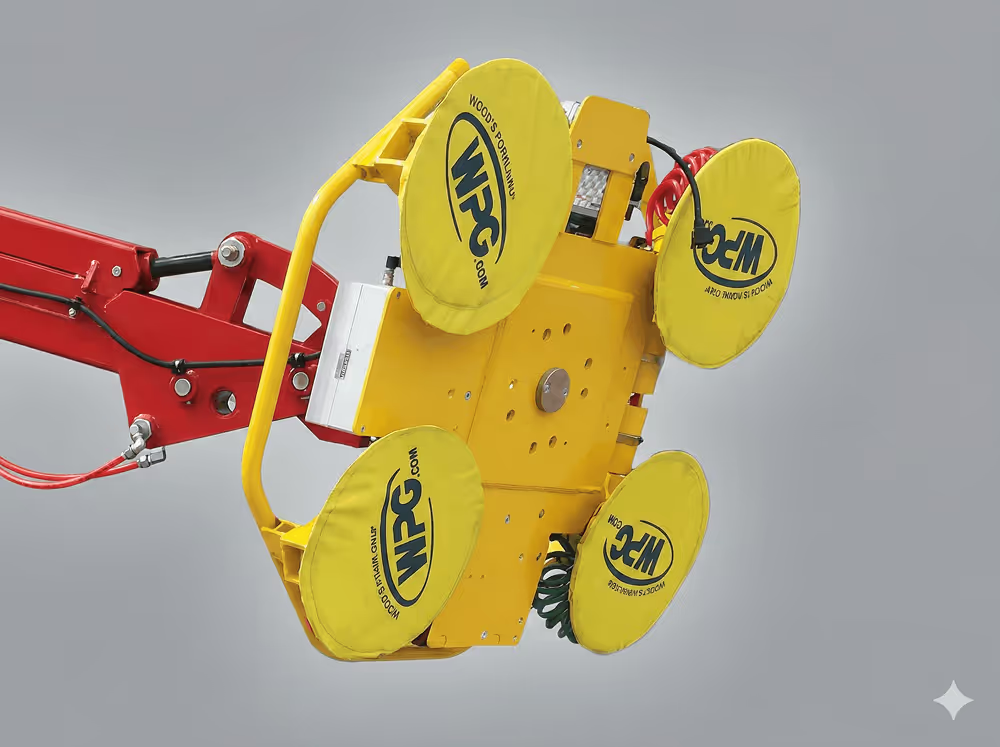
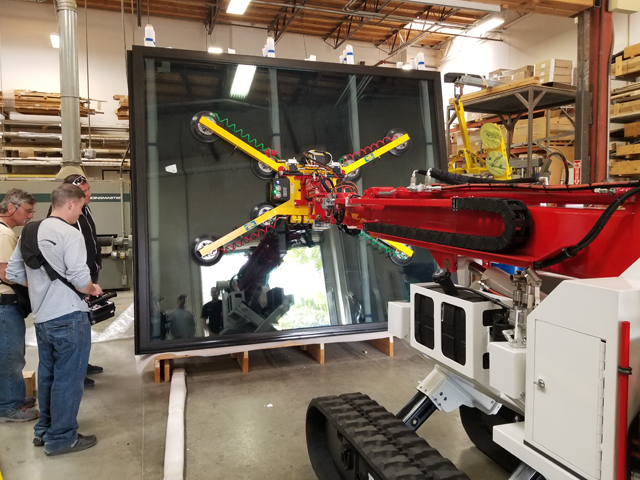
Aerial platforms designed specifically for glass positioning solve this by building multi-axis movement and vacuum lift capability directly into the machine.
What Multi-Axis Control Actually Means for Glass Installation
The term "multi-axis" refers to the number of independent directions a glass panel can be moved and rotated from a single machine. For glass positioning, the most important axes are:
Tilt
Rotate the glass from vertical to horizontal (or any angle between), critical for slipping panels under overhead structures or laying flat for inspection.
Rotation
360° rotation around a vertical axis, allowing the operator to spin the panel to match any mounting angle without repositioning the machine.
Extend / Reach
Horizontal extension away from the machine base, allowing the panel to reach a mounting point that is not directly above the lift.
Lift
Precise vertical control with fine-speed settings near the final position — essential for the last few millimeters of placement.
When these axes are controlled by proportional electric joysticks — meaning the speed of movement matches how far you push the joystick — the result is smooth, controlled, predictable glass placement without the jerks or overshoots that cause breakage and misalignment.

Key Features to Look for in Glass Positioning Equipment
Vacuum Suction Cup Capacity and Rating
The suction cup system must be rated for the glass type, surface texture, and weight you are handling. Smooth, uncoated glass holds vacuum reliably; low-e coatings, fritted surfaces, or heavily textured glass may require specialized cup configurations. Always confirm the rated load, not just the theoretical maximum.
Load Limiter Technology
A rated load limiter automatically adjusts the machine's operating parameters based on which attachment is in use, preventing overloads that could drop a panel or damage the lift. This is a safety-critical feature for glass work — not an optional upgrade.
Machine Width
Glass installation often happens inside buildings — through standard doorways, in finished lobbies, and in narrow corridor installations. A machine that cannot fit through a single door cannot access most interior glazing jobs. The Bailey MC series is under 35 inches wide specifically to address this constraint.
Outrigger or Stability System
At extended reach, the machine needs a stable base. Look for machines with automatic outrigger leveling or a low-ground-pressure track system for work on sensitive floors.
Tilt Range
Confirm the tilt range is sufficient for your installation type. Overhead panels require the ability to tilt to near-horizontal; facade panels at angles require partial tilt with precise holding throughout the installation process.
Typical Applications
Glass positioning equipment serves a wide range of architectural and commercial installation scenarios. Here are the most common applications where dedicated glass lifters deliver the greatest advantage over standard equipment:
Curtain Wall & Facade
Large exterior panels must be lifted to height, positioned at precise angles, and held stable while fastened. Aerial platforms make this a one- or two-person operation.
Interior Glass Partitions
Full-height glass walls in offices, hotel lobbies, and commercial spaces. Machine width and floor protection are critical in these finished environments.
Skylights & Overhead Glazing
Panels must be tilted from vertical to nearly horizontal before being lifted into a roof opening — full tilt capability and confident vacuum hold are required.
Architectural Staircases & Atria
Complex installations with curved or angled panel runs. The machine must approach from multiple directions and hold panels at compound angles.
Commercial Refrigeration & Storefront
Retail glass replacement and refrigerated display case installation — compact, precise equipment for tight aisles and confined back-of-house spaces.

Bailey Cranes' Glass Positioning Equipment
Bailey Cranes designs and manufactures a full line of glass handling telehandlers and mini cranes under the MC Series brand, used by glazing contractors, architectural glass installers, and specialty construction teams across North America.
Our most versatile glass positioning machine for indoor work. At under 35 inches wide, it passes through single doorways and operates on finished floors without marking. The 3-axis manipulator handles glass, metal, granite, quartz, and composite building panels. Proportional electric joystick control provides smooth, precise movement at all stages of the lift.
Zero-emission and low-noise — ideal for occupied buildings, LEED-certified projects, and interior work where air quality matters. Battery runtime supports a full workday of glass installation without interruption.
Adds multi-directional steering (crab steer, spin steer) to the MC 6 platform. Move sideways or rotate in place — critical for positioning panels along a continuous glass wall or in a space where the approach angle must shift mid-installation.
For all-terrain and outdoor glass installation — curtain wall work, retail storefront replacement, and exterior facade work. A tracked undercarriage distributes weight and provides stability on uneven surfaces. 24-foot reach, 1,400-lb capacity.
Designed specifically for glass inspection and pre-installation handling. Deposits a panel on a work table and flips it flat for frame inspection, edge work, or coating application — all within 45 inches of floor clearance. Eliminates the manual flipping process, one of the highest-risk moments in glass handling.
Comparing Glass Positioning Approaches
| Method | Precision | Safety | Speed | Cost Per Panel |
|---|---|---|---|---|
| Manual handling (straps, crew) | High (labor) | |||
| Standard scissor lift + manual | Medium | |||
| Telehandler without manipulator | Medium | |||
| Dedicated glass positioning mini crane | Low (per panel) |
Frequently Asked Questions
Yes. The Bailey MC series is designed for glass but handles metal panels, granite, quartz, precast concrete facades, and architectural cladding using interchangeable attachment configurations.
Weight capacity varies by model. The MC Trax handles up to 1,400 lbs; the MC 6 series handles up to 1,320 lbs with appropriate attachment configuration. Contact our team with your specific panel dimensions and weight for a configuration recommendation.
All MEWP operators in the United States should be trained in accordance with ANSI A92.22 requirements. Bailey Cranes provides documentation and can connect you with training resources. Our machines are designed to be intuitive, but proper training is essential for safe glass work.
Yes. The MC series is designed for job site mobility. Most models can be loaded on a standard trailer or transported in a cargo van. The Trax model is specifically designed for frequent site-to-site moves in outdoor construction environments.

Improve Your Glass Installation Operations
Whether you're handling high-rise facade work, installing interior partition systems, or tackling complex architectural glass — Bailey Cranes can help you select the right equipment for your specific application and panel dimensions.