A semiconductor fab is one of the most controlled environments ever built. Wafer fabrication requires ISO Class 1 to Class 5 cleanroom conditions — fewer airborne particles per cubic meter than a hospital operating theater by several orders of magnitude. A single contamination event can ruin an entire wafer run worth hundreds of thousands of dollars.
Aerial lifts and work platforms are necessary in these environments for equipment installation, maintenance, and facility operations. But a standard lift introduces contamination through off-gassing, hydraulic leaks, and particle shedding from motors and worn surfaces. Clean room lifts are engineered to eliminate these risks. Here is what to know before you specify one.

Why Semiconductor Cleanrooms Are the Hardest Environment for Lifting Equipment
Semiconductor manufacturing demands conditions that are fundamentally hostile to standard industrial equipment. Understanding these conditions explains why cleanroom-specific lifts are not simply "cleaner" lifts — they are fundamentally different machines.
Particle Control
ISO 14644-1 Class 5 allows no more than 3,520 particles per cubic meter at 0.5 microns. Standard motors, hydraulics, and drive components all produce particles through wear. A cleanroom lift must shed zero contamination during operation.
Chemical Compatibility
Semiconductor manufacturing uses acids, solvents, and specialty gases. Lift materials — paints, lubricants, seals, plastics — must be compatible with these chemicals and must not off-gas compounds that contaminate wafer surfaces.
ESD Control
Semiconductor devices are ESD-sensitive. Equipment operating in the fab must be ESD-safe — it must not generate or accumulate static charges that could damage wafers or control systems.
Floor Loading & Vibration
Cleanroom floors are often raised access floors with limited load capacity. Any vibration transmitted to the floor can affect lithography tools and metrology equipment requiring precise isolation.
Drip Protection
Any hydraulic leak — even a single drop — in a cleanroom is a contamination event. Cleanroom lifts require fully sealed hydraulic systems with integrated drip containment built into the machine structure.
ISO Cleanroom Classifications at a Glance
Clean room lifts used in semiconductor environments must be specified and tested to the ISO class of the space where they will operate. This is not a nominal specification — the equipment must have been tested and characterized for its actual particle generation rate at operating conditions.
| ISO Class |
Max Particles / m³ (≥0.5 µm) |
Typical Application |
Level |
| ISO Class 1 |
10 |
Leading-edge logic fab (advanced nodes) |
Most Strict |
| ISO Class 2 |
100 |
EUV lithography bays |
Most Strict |
| ISO Class 3 |
1,000 |
Memory fab, photolithography |
High |
| ISO Class 4 |
10,000 |
Etch, diffusion, CMP |
High |
| ISO Class 5 |
100,000 |
Assembly, packaging, general fab |
Moderate |
| ISO Class 6–8 |
Higher |
Tool staging, support areas |
Entry |

What to Specify in a Clean Room Lift
When selecting or specifying a cleanroom lift for a semiconductor facility, the following criteria should appear in your procurement specification. These are not optional features — they are the engineering baseline that separates a true cleanroom lift from a standard machine dressed up for the job.
Particle Generation Testing
The lift should have particle generation data from testing in a controlled environment. Ask for test reports that characterize particle emissions during operation at specified speeds and duty cycles. Do not accept claims without data.
Sealed Hydraulic System with Drip Containment
All hydraulic lines, fittings, and reservoirs must be enclosed or covered to prevent contamination in the event of a leak. A drip pan or collection system integrated into the machine base is standard for ISO Class 5 and better environments.
ESD-Safe Construction
All wheels, platform surfaces, and operator controls should be ESD-safe. Confirm that resistance values meet your facility's ESD control plan requirements — typically 10⁵ to 10⁸ ohms to ground.
Materials Compatibility
Request a materials list and off-gassing characterization for paints, lubricants, seals, and plastics. Materials that off-gas volatile organic compounds (VOCs) or silicones can contaminate sensitive processes even in sealed cleanrooms.
Closed-Loop Drive System
A closed-loop electric drive with encoder feedback provides precise, smooth movement without the jerks or vibrations that can disturb sensitive equipment. It also reduces carbon brush wear in motors — a significant source of particle generation in open motors.
Stiff Boom or Mast Structure
Flexible booms that sway or vibrate at height are problematic in environments where your platform must remain in a precise position relative to process equipment. Specify a rigid mast or boom structure with minimal deflection at rated load.
Low Profile and Compact Width
Cleanroom aisles are tight and traffic is controlled. Equipment must fit within defined aisle widths and should have a turning radius appropriate to the bay layout.
Common Applications in Semiconductor Fabs
-
01
Process Tool Installation and Removal
Semiconductor process tools — deposition systems, etch chambers, lithography scanners — must be periodically removed for maintenance or replacement. Clean room lifts enable safe, controlled lifting and positioning of tool components in the fab environment.
-
02
Overhead Infrastructure Maintenance
Cleanroom HVAC systems, fan filter units (FFUs), lighting systems, and overhead process gas lines all require periodic maintenance. Clean room lifts provide safe, contamination-controlled access to these overhead systems.
-
03
Facility Construction and Expansion
During cleanroom buildout or expansion, lifts are used to install ceiling grid systems, FFUs, and overhead utilities. Using clean room-rated equipment during construction prevents contaminating the space before qualification.
-
04
Equipment Relocation
As process flows change, tools must be repositioned within the fab. A portable, clean room-rated lift allows tool moves without introducing a rental machine that has not been validated for the environment.
-
05
Advanced Packaging and Data Center Facilities
The same requirements that apply to semiconductor fabs increasingly apply to advanced packaging facilities, AI chip manufacturing, and hyperscale data center construction — all of which use ISO Class 5–7 controlled environments.
How Bailey Cranes Builds for Cleanroom Environments
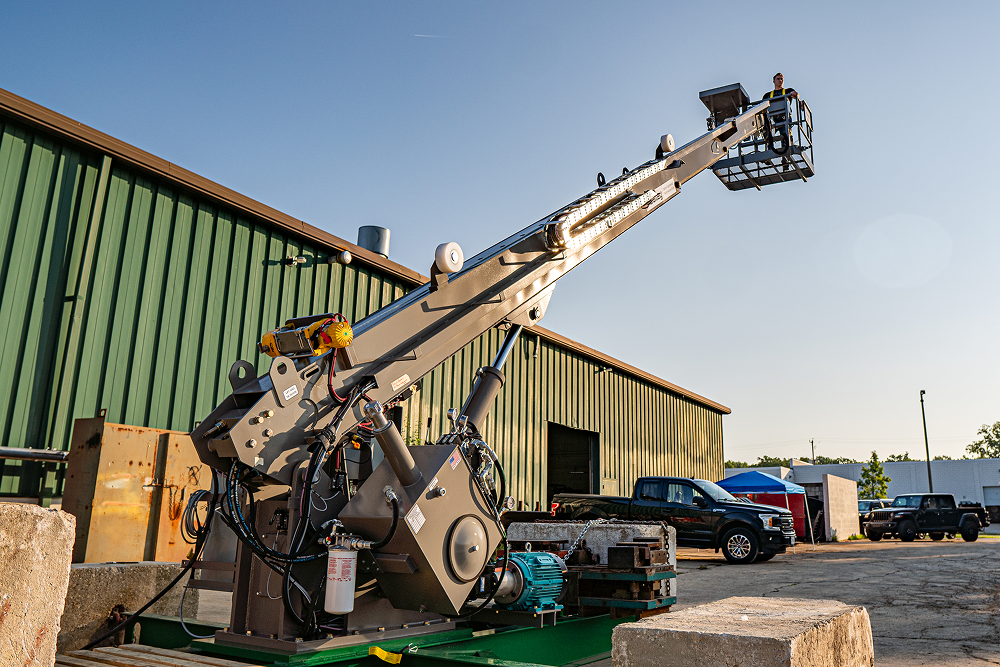
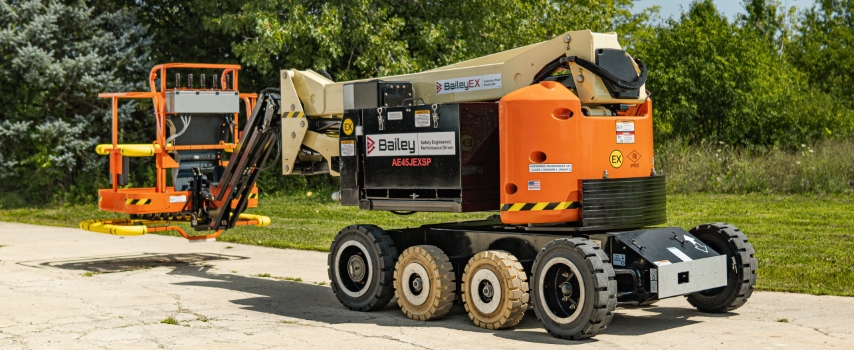
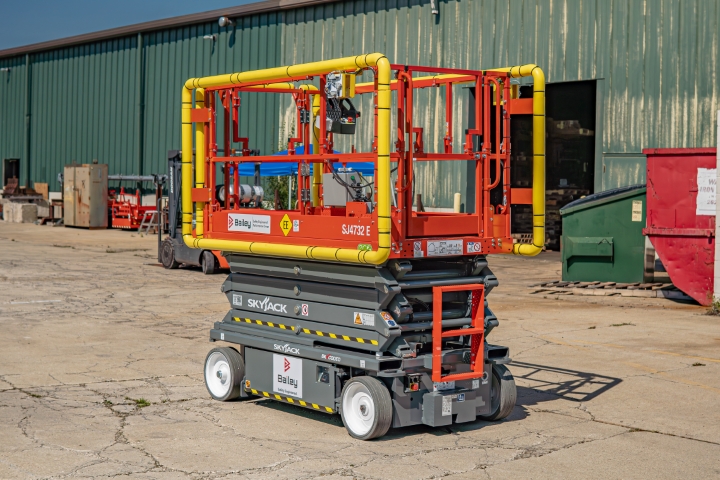
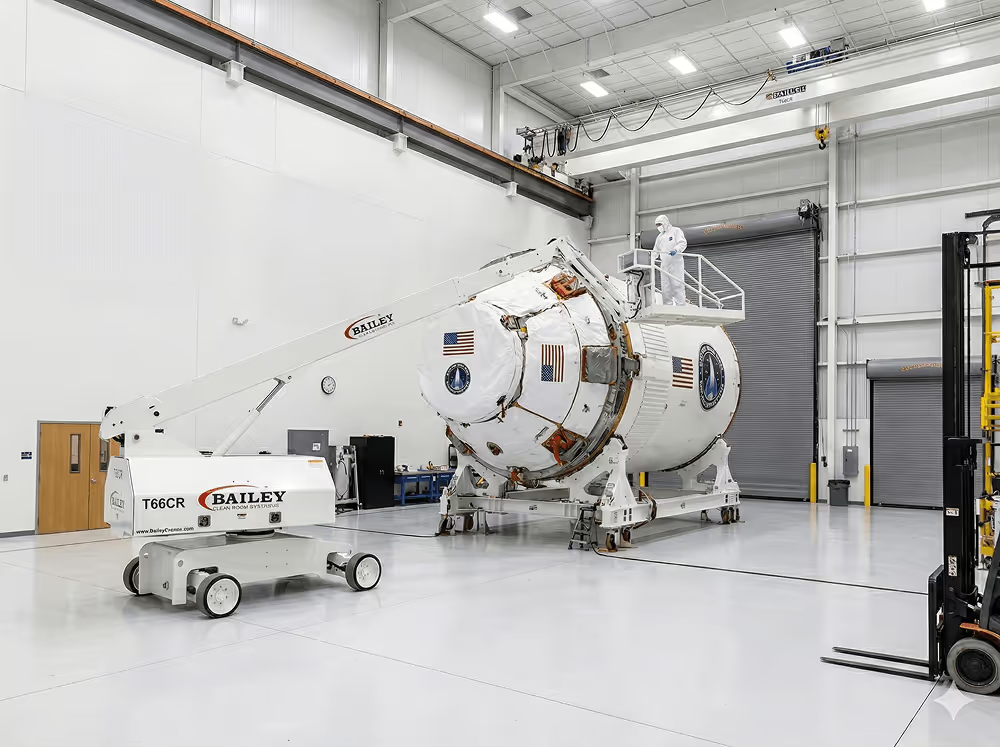
Bailey Specialty Cranes & Aerials has designed and manufactured cleanroom lifts for ISO Class 1–5 semiconductor environments, advanced packaging facilities, and pharmaceutical cleanrooms for over two decades. Our approach starts from the contamination requirement — not from a standard industrial lift with modifications.
Drive System
Closed-Loop Electric Drive
Encoder feedback throughout. Eliminates carbon brush wear particles and delivers the smooth, controlled movement critical for delicate tool handling.
Contamination Control
Full Drip Protection
All hydraulic components are enclosed. Any potential leak is contained within the machine frame — preventing floor contamination in ISO-qualified environments.
Structure
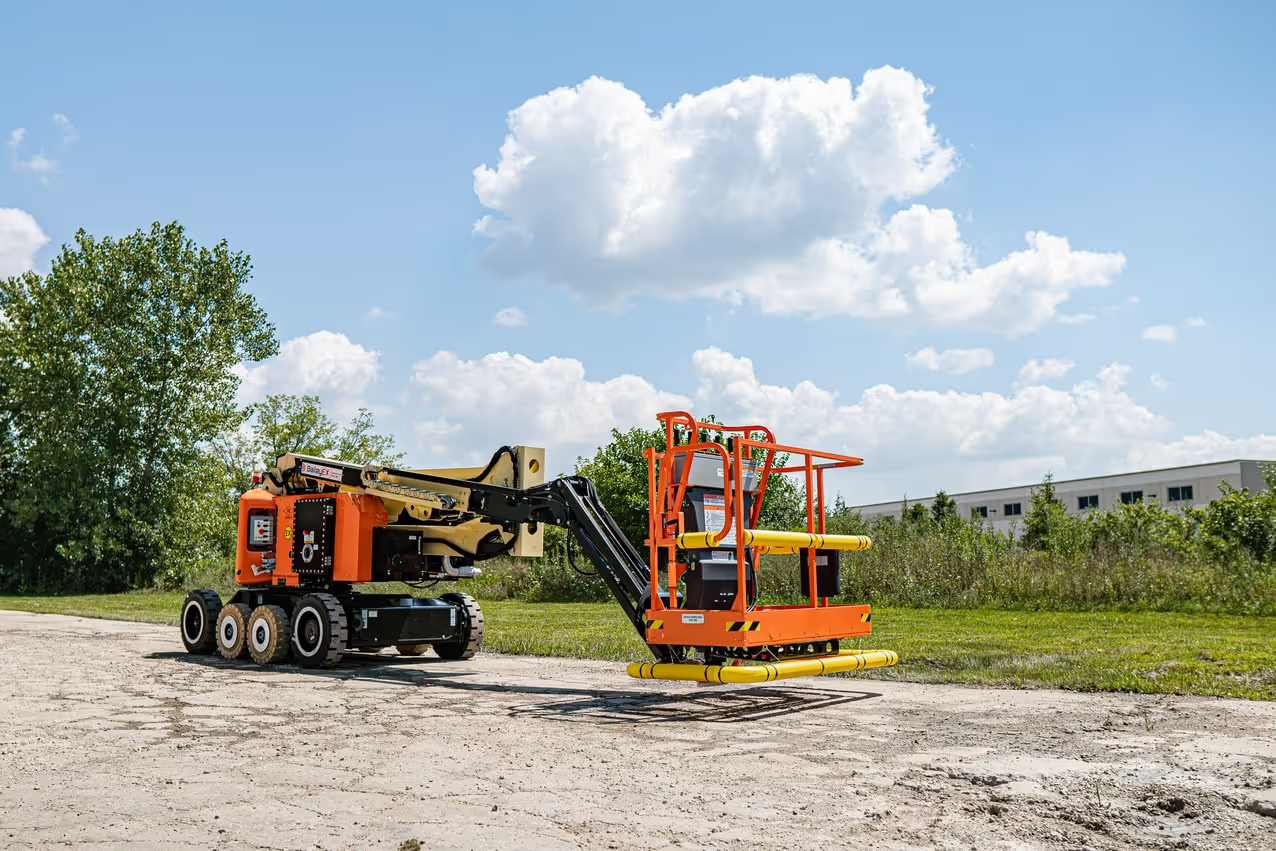
Stiff Boom Construction
Rigid boom structures designed for minimal deflection at height. Critical for precision positioning and avoiding vibration transfer to nearby sensitive equipment.
Materials
Low Outgassing Materials
All painted surfaces, seals, lubricants, and platform surfaces are reviewed against semiconductor industry off-gassing standards. Material data available on request.
Static Control
ESD-Safe Options
ESD-safe wheel formulations and platform surface treatments available for environments with active ESD control requirements.
Engineering
Custom Platform Configurations
Asymmetric platforms for edge-of-tool access, safety cages for cleanroom gowning requirements, and platform sizes matched to your aisle dimensions.
ISO 9001:2015 Certified
Veteran-Owned SDVOSB
Trusted by NASA
U.S. Air Force Approved
Boeing & Lockheed Martin
ISO Class 1–5 Capable

Cleanroom Lift vs. Standard Lift
| Feature |
Standard Industrial Lift |
Bailey Cleanroom Lift |
| Motor particle generation |
High — brushes, open motors |
✓ Minimal — closed-loop, brushless |
| Hydraulic leak risk |
Present, uncontained |
✓ Fully contained drip system |
| ESD safety |
✗ Not addressed |
✓ ESD-safe materials and grounding |
| Off-gassing characterization |
✗ Not characterized |
✓ Characterized and controlled |
| Particle generation testing |
✗ None |
✓ Tested at operating conditions |
| Full material documentation |
✗ Not provided |
✓ Full material disclosure |
Can a standard rental lift be used in your cleanroom temporarily?
In most cases, no. Rental fleets are not characterized for cleanroom use, and a single introduction event can contaminate a space that has taken months to qualify. Even short-duration access should use qualified cleanroom equipment.
Frequently Asked Questions
What ISO class can Bailey cleanroom lifts operate in?
Our cleanroom lifts have been deployed in ISO Class 1 through Class 5 environments. The specific configuration appropriate for your cleanroom class depends on the application, duty cycle, and local requirements. Contact our team with your ISO classification and application details for a configuration recommendation.
How do I validate a lift for our cleanroom before use?
Most semiconductor facilities require a vendor qualification process and a cleanroom qualification protocol before any new equipment is allowed on the fab floor. Bailey Cranes can provide particle generation test data, material disclosures, and technical documentation to support your qualification process.
Can a standard rental lift be used in our cleanroom temporarily?
In most cases, no. Rental fleets are not characterized for cleanroom use, and a single introduction event can contaminate a space that has taken months to qualify. Even short-duration access should use qualified cleanroom equipment that has been validated for your environment.
Do you offer custom configurations for specific tool types or facility layouts?
Yes. Custom platform sizes, integrated tooling brackets, specific wheel configurations, and special mast heights are all available. Our engineering team works directly with facility engineers to specify equipment that fits your constraints.
Specify the Right Lift for Your Cleanroom
Whether you're building a new fab, upgrading an existing facility, or qualifying equipment for a specific cleanroom class, our engineering team has the background to help you get it right.
View Clean Room Lift Models →
ISO 9001:2015 Certified · Veteran-Owned · Trusted by NASA, Boeing, Lockheed Martin & leading semiconductor manufacturers


.avif)