.avif)
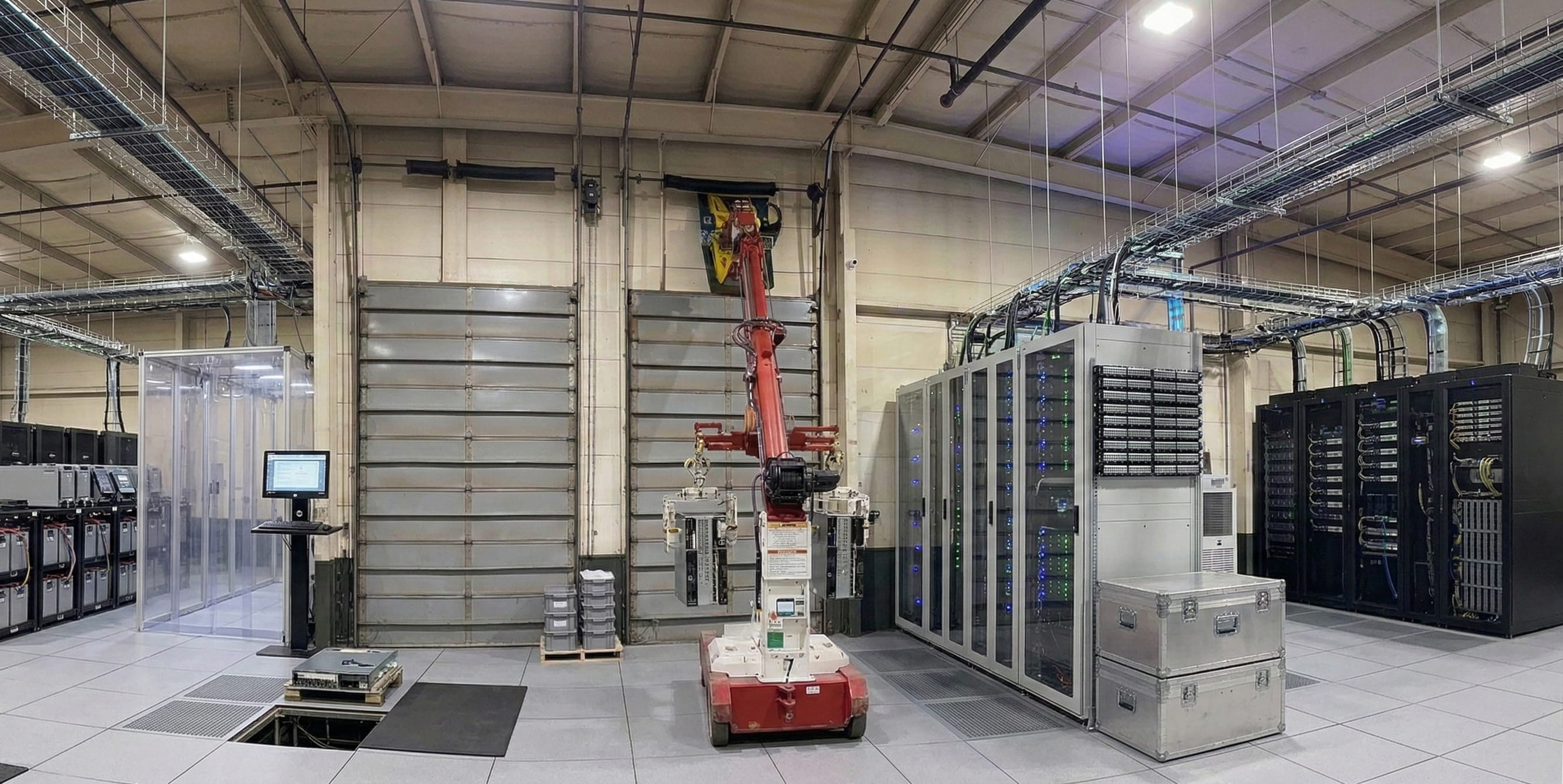

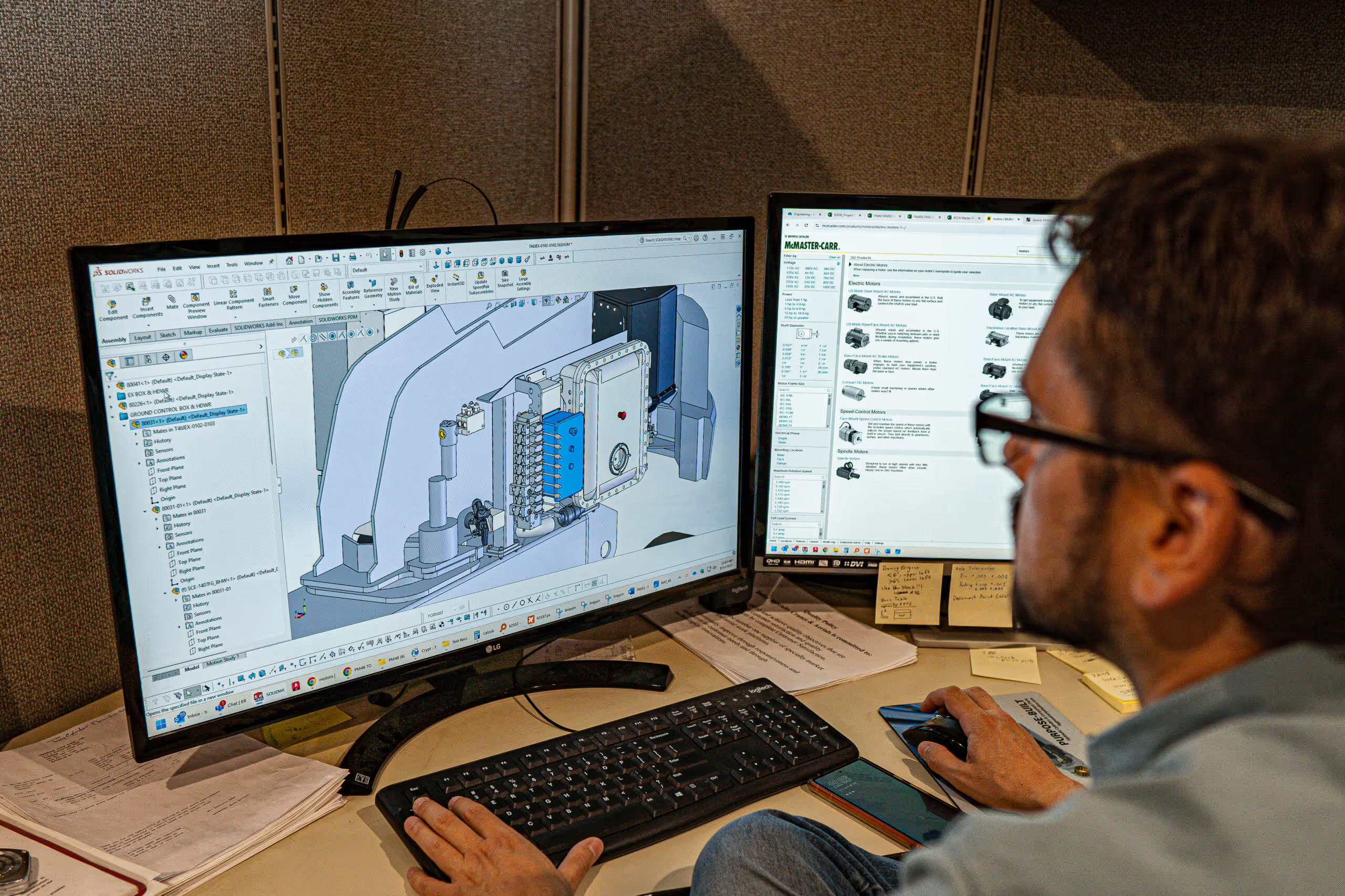
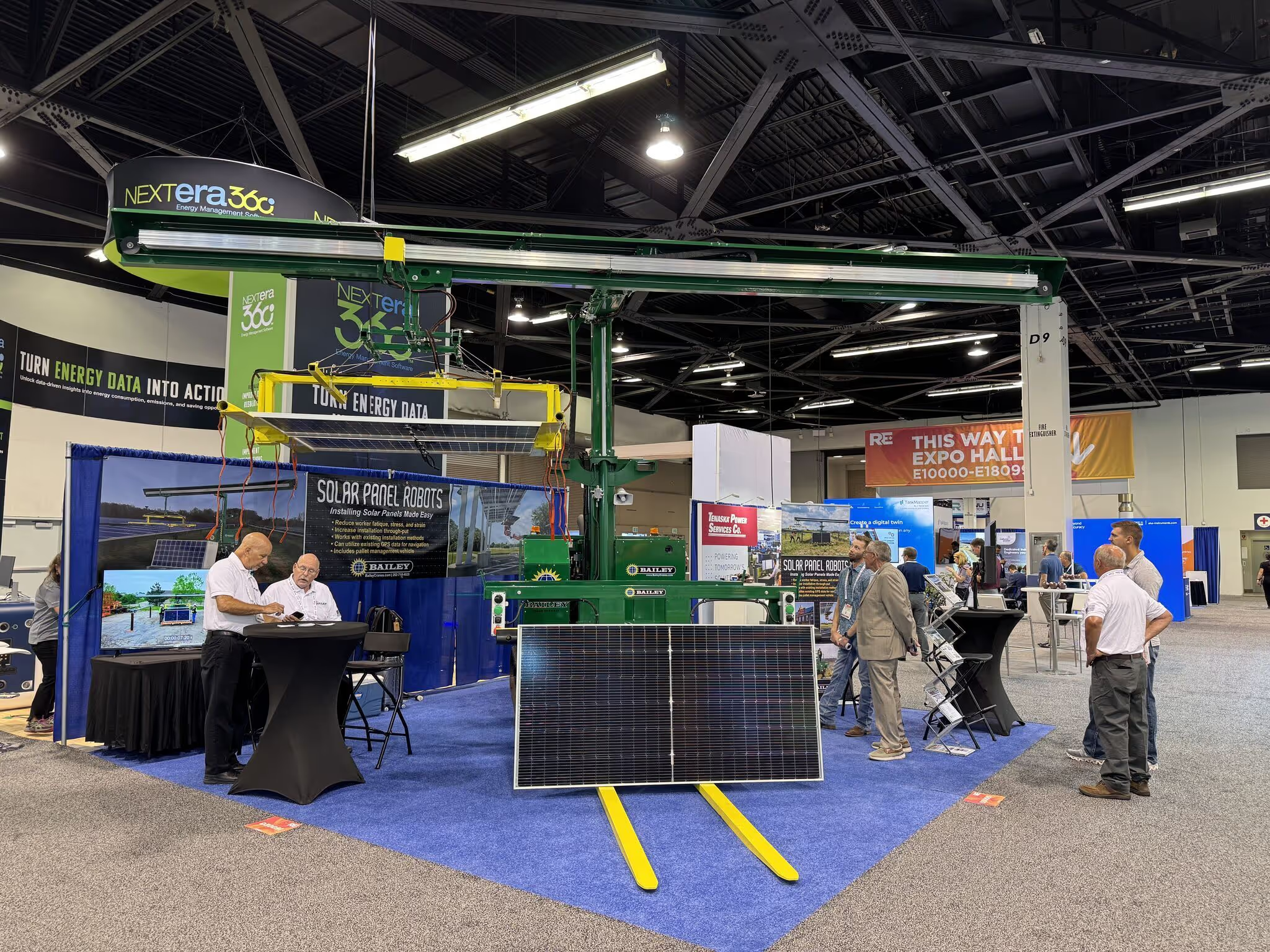
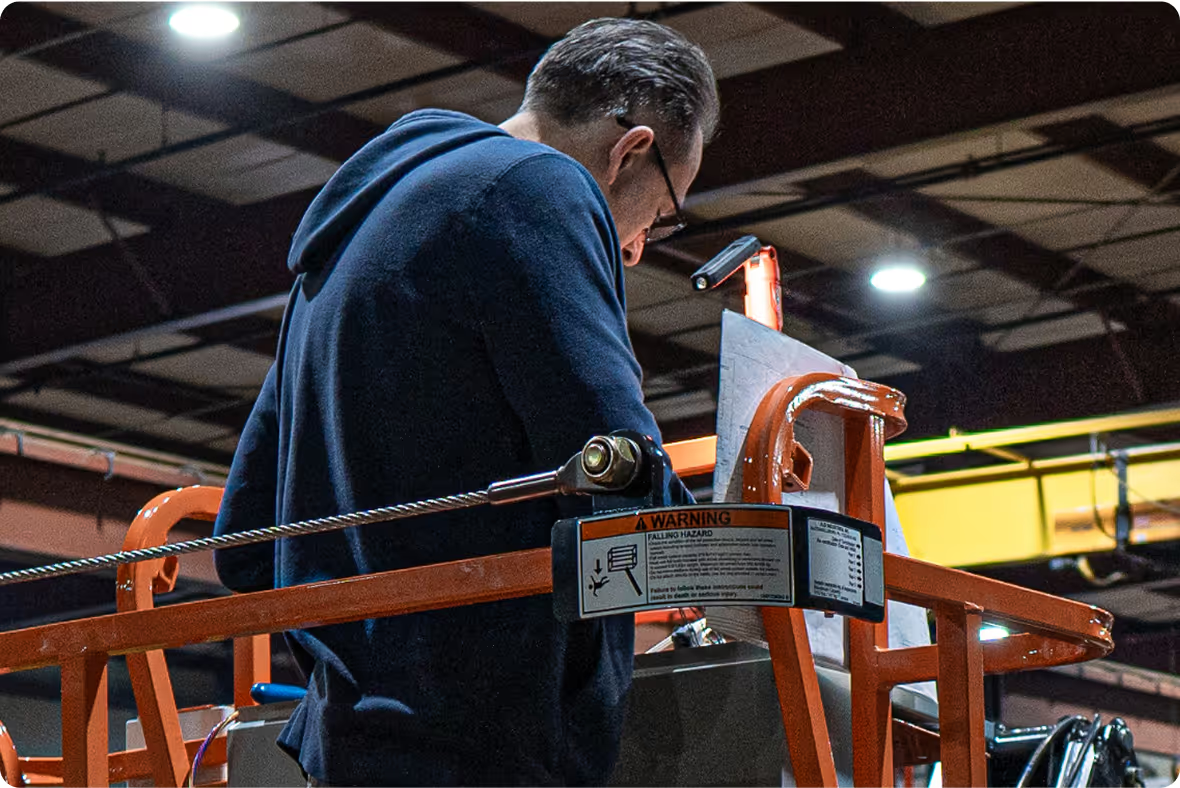



Every year, crane and aerial lift collisions cause injuries, damage expensive equipment, and halt production in facilities where downtime is unacceptable. The good news: most of these incidents are preventable. Collision avoidance systems have become a standard safety layer in aerospace hangars, pharmaceutical plants, warehouses, and industrial manufacturing floors — working in the background, giving operators real-time awareness and stopping equipment before contact occurs.
What Is a Crane Collision Avoidance System?
A crane collision avoidance system is a sensor-based safety technology that detects objects, personnel, or structures within a defined range around a crane or aerial work platform. When a potential collision is identified, the system responds through one or more actions:
- Issuing an audible alarm or visual warning to the operator
- Slowing the crane's movement automatically as it approaches the hazard
- Stopping all motion before contact occurs
Unlike traditional safety measures — floor markings, mirrors, and spotters — a collision avoidance system operates in real time and does not depend on human reaction speed. In high-stakes environments, that difference can prevent serious injury or protect millions of dollars in equipment.
How Do These Systems Work?
Modern crane anti-collision systems rely on one or more sensor technologies. Each has distinct strengths depending on the environment:
Laser Sensors
Most common in precision industrial environments. Projects a configurable field with multiple zones — a warning zone farther out, a stop zone closer in — giving operators time to react before automatic intervention.
Radar & Ultrasonic
Used where dust, smoke, or moisture may interfere with laser performance. Detects movement and distance via radio waves or sound — well-suited for outdoor or rough-terrain applications.
AI Vision Systems
The newest category — uses machine learning to distinguish between objects, classify threats, and provide operators with a live visual feed. Increasingly common in mission-critical or automated facilities.
LIDAR
Creates a 3D map of the crane's surroundings with millimeter-level precision. Ideal for tight indoor spaces where any contact could damage sensitive equipment or personnel.
Normal operation
Speed reduction
Full stop
Why Collision Avoidance Matters in Industrial Settings
The case for collision avoidance becomes clear once you look at where cranes and aerial lifts actually operate — and what's at stake when something goes wrong.
Aerospace & Defense
Components worth millions are assembled in hangars where a single crane contact could ground an aircraft, trigger a compliance event, and require a full damage assessment.
Pharmaceutical & Cleanroom
A contamination event from equipment impact can invalidate an entire production run. Any collision — even a minor one — can cost far more than the damage itself.
Manufacturing & Warehousing
High-density traffic, narrow aisles, and multiple machines operating simultaneously create constant collision risk. Automated prevention becomes critical the more machines share a space.
Ports & Heavy Industry
Overhead cranes handle massive loads at height. Even a small swing or positioning error can strike a worker, damage a structure, or cause a dropped load incident.
In all of these settings, the cost of a collision prevention system is trivial compared to the cost of a single serious incident.
Key Features to Look For
Not all collision avoidance systems are equal. Here is what to evaluate before you invest:
Collision Avoidance in Bailey Cranes Equipment
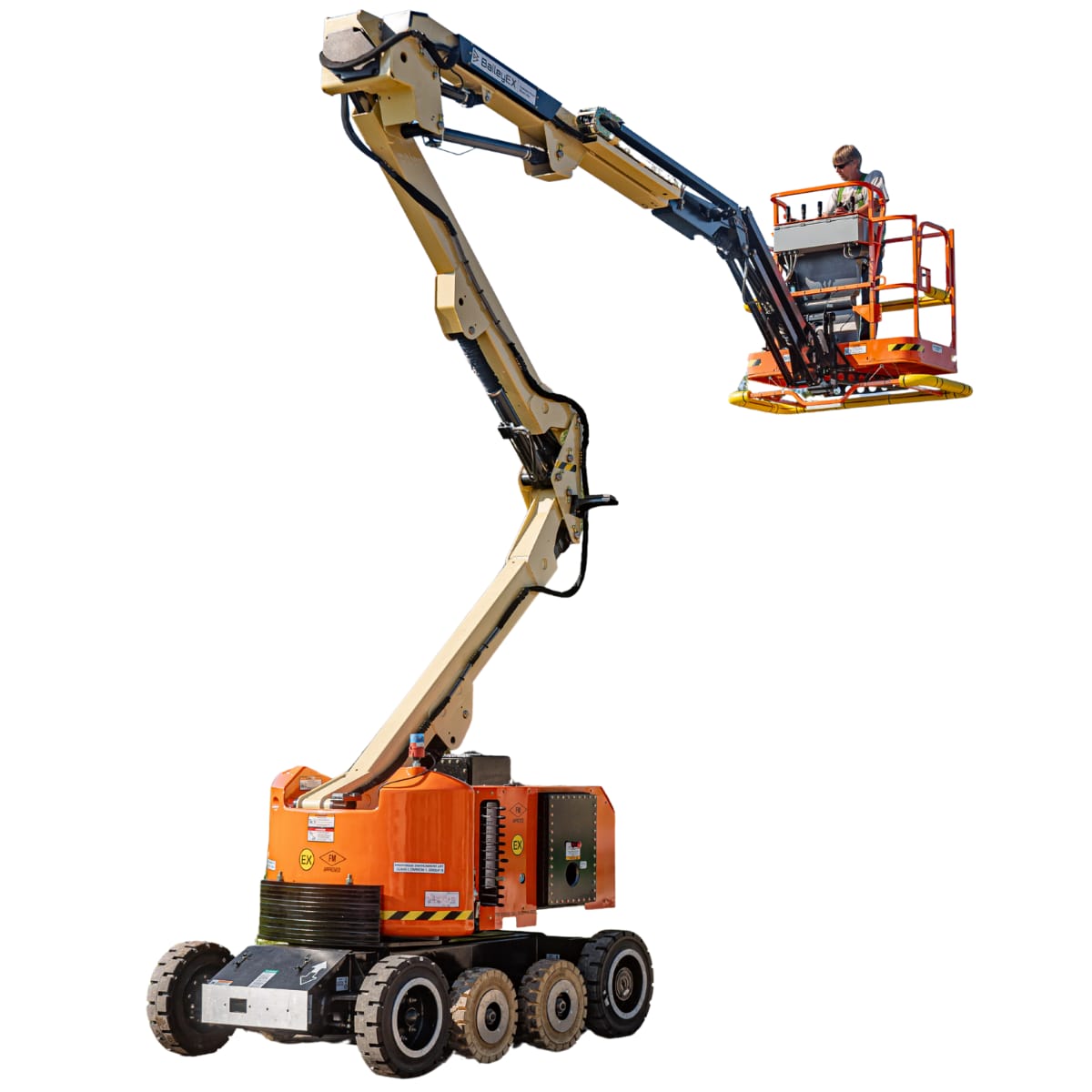
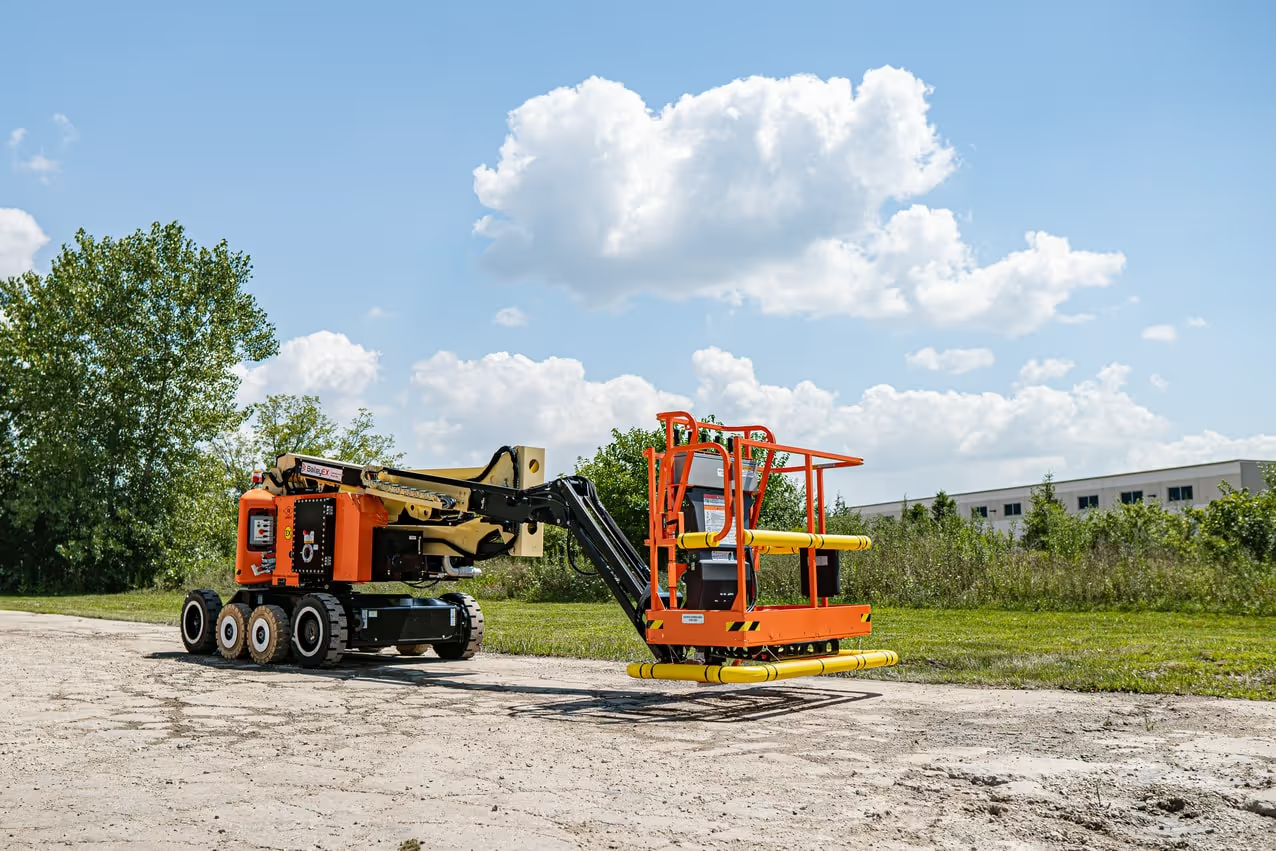
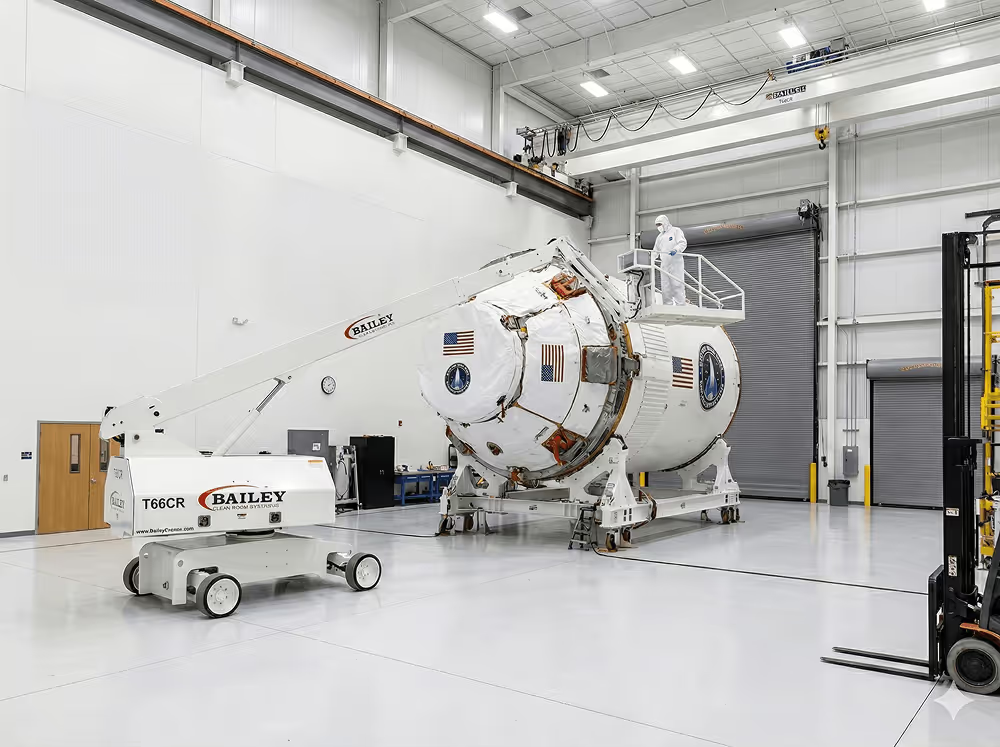
Bailey Specialty Cranes & Aerials has engineered collision avoidance into our product line for over two decades. Our systems are built from the ground up for mission-critical environments where failure is not an option.
Scissor Lifts
Eye-safe laser scanning on both sides of the machine, with the scanner array moving with the extension deck so coverage stays accurate at any platform height. Color-coded feedback — green for clear, yellow for warning, red for stop — visible from the platform at all times.
Boom Lifts
Multi-direction sensing with automatic speed reduction as the operator approaches a restricted zone, and instant stop protection for direct contact scenarios.
EX Series (Explosion-Proof)
IP67-rated sensors with anti-collision systems meeting NFPA and NEC 70 requirements — critical for aerospace paint hangars, chemical processing, and Class I Division I hazardous locations.
Collision Avoidance vs. Traditional Safety Methods
The table below shows why automated collision prevention is rapidly becoming a baseline expectation rather than an optional upgrade — especially in regulated industries.
| Safety Measure | Instant Response | Operator-Independent | Works in Low Visibility | Auto-Stop |
|---|---|---|---|---|
| Floor Markings | — | ✗ | ✗ | ✗ |
| Mirrors / Spotters | Human lag | ✗ | ✗ | ✗ |
| Proximity Alarms | ✓ | ✓ | ✓ | ✗ |
| Full Collision Avoidance System | ✓ | ✓ | ✓ | ✓ |
Frequently Asked Questions
OSHA does not mandate collision avoidance systems for most crane types by name, but regulations require employers to identify and control workplace hazards. In many high-risk environments, installing a collision avoidance system is among the most effective ways to demonstrate OSHA compliance and reduce recordable incidents.
Yes. Bailey Cranes offers retrofit solutions for existing lifts in sensitive or regulated facilities. Feasibility depends on the lift's control system architecture, but most modern machines can accommodate sensor integration.
Properly configured systems should not meaningfully impact throughput. The automatic slowdown zones are typically narrow, and operators quickly adapt their movements. Most facilities find the reduction in incident-related downtime more than compensates for any initial operational adjustment.
Our sensors are IP67-rated, making them suitable for wet, dusty, and outdoor environments. Our EX-rated lifts carry additional hazardous location certifications for explosive atmospheres including aerospace paint hangars and chemical processing facilities.
Selecting the right collision avoidance system starts with understanding your facility's specific layout, traffic patterns, and risk zones. Bailey Cranes works directly with clients to assess site conditions and configure systems that match real operational requirements — whether you're specifying new equipment, upgrading existing lifts, or evaluating options after a near-miss.